
Which Window Blinds Are Best for Florida Homes?
A Room-by-Room Guide
Choosing blinds for a Florida home takes more than finding a color you like. Strong sunlight, glare, humidity, privacy, window size, and daily use can all affect which option works best.
This room-by-room guide explains what to consider before choosing blinds for your living room, bedroom, kitchen, bathroom, office, and other spaces.
The Quick Answer
The best blinds depend on the room.
Faux wood blinds are often a practical choice for kitchens, bathrooms, laundry rooms, and other humid or high-use spaces. Their durable surface and easier cleaning can make them well suited to rooms where moisture, splashes, fingerprints, or frequent use are concerns.
Real wood blinds may be a better fit for living rooms, bedrooms, dining rooms, and offices where natural appearance, authentic grain, and lighter weight matter more.
Vertical blinds or panel-style treatments may work well for wide openings and sliding glass doors. Cordless options can make everyday use feel cleaner and easier, while motorized treatments may help with tall or hard-to-reach windows.
The right choice depends on moisture, sunlight, privacy, window size, style, maintenance preferences, and how often the blinds will be used.
Best Blinds for Living Rooms
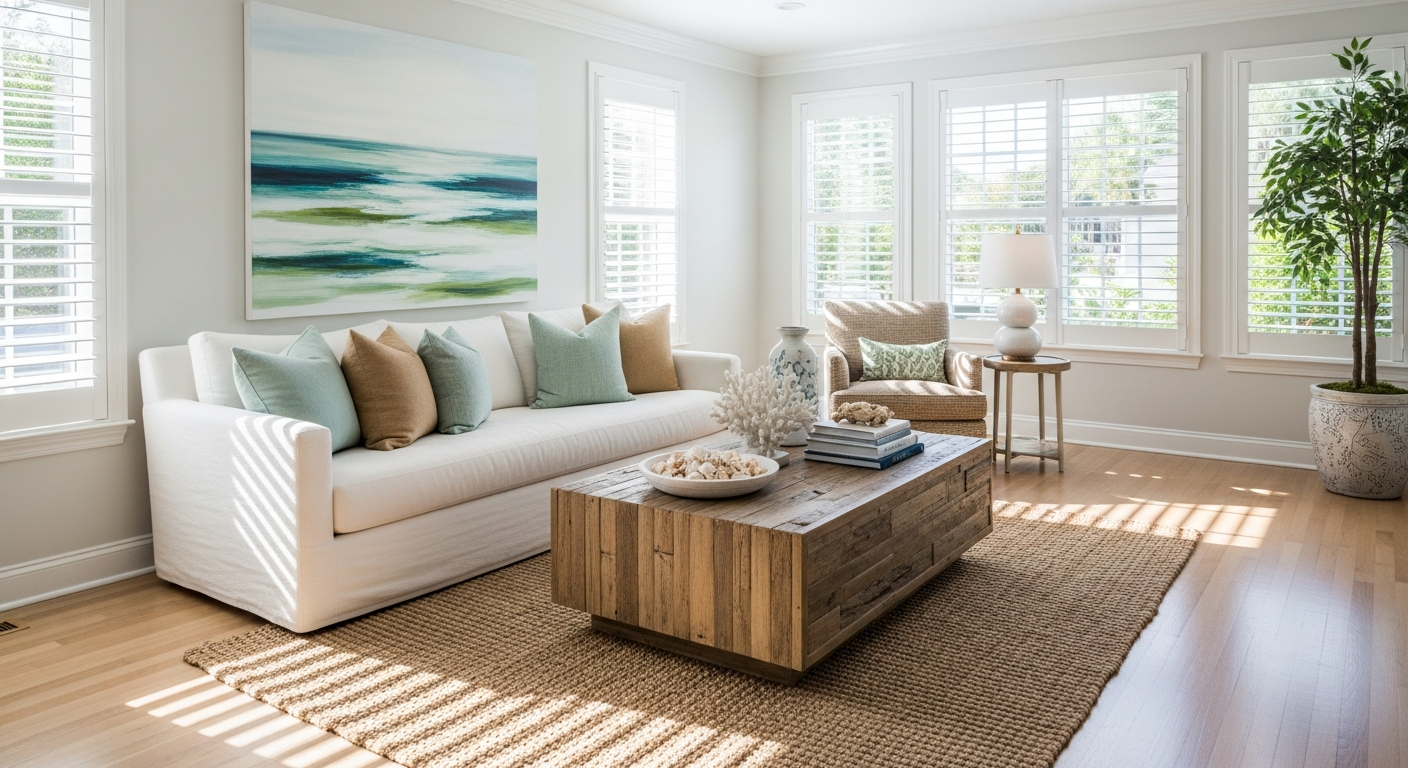
Living rooms often need a balance of privacy, natural light, glare control, and appearance. The blinds should help the room feel finished without making it unnecessarily dark.
Faux wood blinds can provide adjustable light control, privacy, and easy maintenance. They may be especially practical in busy family rooms or spaces where children and pets are active.
Real wood blinds may add warmth and a furniture-like appearance. Their natural grain can coordinate well with hardwood flooring, built-ins, trim, cabinets, and other wood finishes.
For very bright living rooms, blinds may also be paired with shades or decorative side panels. Layering treatments can soften direct light and add visual depth while keeping the blinds available for everyday privacy and light adjustment.
Good options to consider
- Real wood blinds
- Faux wood blinds
- Cordless blinds
- Blinds paired with decorative side panels
- Motorized alternatives for tall windows
- Layered treatments for stronger glare control
What to consider
- Afternoon glare
- Privacy from the street or nearby homes
- Protecting furniture, artwork, and flooring
- Large or tall window openings
- Matching trim, flooring, and furniture
- Preserving natural light without leaving the room exposed
Best Blinds for Bedrooms
Bedrooms usually need stronger privacy and better control over early morning or late afternoon light.
Faux wood and real wood blinds can both provide adjustable privacy. Tilting the slats allows you to reduce outside visibility while still admitting some daylight.
However, standard blinds usually do not create complete blackout conditions. Light may enter between the slats and around the edges of the blind.
Homeowners who need stronger room-darkening may want to combine blinds with a blackout shade, room-darkening shade, or another layered treatment.
Good options to consider
- Faux wood blinds
- Real wood blinds
- Cordless blinds
- Blinds paired with blackout shades
- Motorized controls for convenience
- Layered treatments for stronger privacy and light control
What to consider
- How much morning sunlight enters the room
- Whether nearby homes can see into the bedroom
- Whether daytime privacy is enough
- Whether nighttime privacy is a concern
- Whether stronger room-darkening is needed
- How often the blinds will be raised or tilted
Best Blinds for Kitchens
Kitchens are active spaces where blinds may be exposed to humidity, cooking residue, splashes, fingerprints, and frequent cleaning.
Faux wood blinds are often the more practical starting point because they are durable and usually easier to wipe clean than natural wood. Their moisture resistance can also make them a better fit for windows near sinks, cooking areas, or exterior doors.
Cordless faux wood blinds may offer a cleaner appearance and simpler everyday operation.
Not every faux wood product should be described as waterproof. Product materials and manufacturer guidance vary.
Good options to consider
- Faux wood blinds
- Cordless faux wood blinds
- Durable composite blinds
- Easy-clean finishes
- Simple neutral colors that coordinate with cabinets and counters
What to consider
- How close the window is to the sink
- Whether cooking steam reaches the blinds
- How often the room needs cleaning
- Whether the window is near an exterior door
- Whether the blinds will be raised frequently
- How the finish coordinates with cabinets, counters, and flooring
Best Blinds for Bathrooms
Bathrooms experience more moisture than most rooms, especially around showers, tubs, and sinks.
Faux wood blinds are commonly considered because composite materials generally handle humidity better than natural wood. They are also usually easier to wipe clean.
Privacy should be evaluated carefully, especially for street-facing bathrooms, first-floor windows, or windows near neighboring homes.
Natural wood may still work in some large, well-ventilated bathrooms where the window is far from water. The final choice should be based on the actual room conditions rather than a one-size-fits-all rule.
Good options to consider
- Faux wood blinds
- Cordless faux wood blinds
- Privacy-focused blinds
- Moisture-resistant alternatives
- Other treatments designed for humid rooms
What to consider
- Humidity
- Steam
- Privacy
- Easy cleaning
- Window proximity to water
- Ventilation
- Whether the window is opened frequently
Best Blinds for Home Offices
Home offices need glare control without removing all natural light.
The right blinds can help reduce reflections on computer screens while keeping the room comfortable and professional. Adjustable slats make it possible to redirect light instead of blocking it completely.
Real wood blinds may coordinate well with desks, shelving, flooring, and trim. Faux wood blinds may provide a similar appearance with easier maintenance.
Good options to consider
- Real wood blinds
- Faux wood blinds
- Cordless blinds
- Motorized options for frequently adjusted windows
- Layered treatments for stronger glare control
What to consider
- The direction the window faces
- Whether glare reaches the computer screen
- How frequently the blinds are adjusted
- Whether the window is tall or difficult to reach
- Whether the room needs privacy during video calls
- How the blinds coordinate with furniture and shelving
Best Blinds for Dining Rooms
Dining rooms often benefit from a warmer and more finished appearance.
Real wood blinds can add natural grain, texture, and character. They may coordinate especially well with dining furniture, wood flooring, trim, built-ins, and nearby living spaces.
Faux wood blinds can create a similar painted or stained appearance with easier maintenance and often a lower price point.
Good options to consider
- Real wood blinds
- Faux wood blinds with wood-look finishes
- Cordless blinds
- Blinds paired with decorative panels
What to consider
- Furniture color
- Flooring
- Trim
- Cabinetry
- Wall color
- Nearby living-room treatments
- Whether the room is formal or casual
- How much direct sunlight enters the space
Best Blinds for Laundry Rooms
Laundry rooms may experience humidity, heat, lint, and frequent use.
Faux wood blinds are often practical because they are easier to clean and generally better suited to moisture than natural wood.
Simple, durable finishes usually make more sense than delicate or highly decorative materials in a working space.
Consider how close the window is to the washer, dryer, utility sink, or exterior door. Also think about ventilation and how frequently the blind will be handled.
Good options to consider
- Faux wood blinds
- Cordless blinds
- Easy-clean finishes
- Simple composite blinds
Best Blinds for Children's Rooms and Nurseries
Safety and easy operation should come first in children's rooms and nurseries.
Cordless blinds or products with manufacturer-approved child-safe control systems can reduce loose-cord concerns. The specific product, control system, installation, and room setup all matter.
No window treatment removes every possible risk, so homeowners should follow product instructions and manufacturer guidance.
Good options to consider
- Cordless blinds
- Manufacturer-approved child-safe controls
- Simple, easy-to-operate products
- Blinds paired with room-darkening treatments
- Motorized controls where appropriate
What to consider
- Privacy
- Nap and sleep schedules
- Morning sunlight
- Ease of cleaning
- Furniture placement near the window
- How often the treatment will be adjusted
Best Blinds for Sliding Glass Doors
Standard horizontal blinds are not always the easiest solution for wide sliding glass doors.
Wide openings need treatments that move easily and provide convenient access to the door. Vertical blinds, panel-style treatments, or other wide-opening solutions may work better than one large horizontal blind.
Good options to consider
- Vertical blinds
- Panel-style treatments
- Split-control solutions
- Treatments that stack to the side
- Motorized options where appropriate
What to consider
- Which direction the door opens
- How often the door is used
- Whether pets or children use the doorway
- How much privacy is needed
- Whether the treatment should preserve an outdoor view
- How much direct sunlight enters through the glass
Best Blinds for Large Windows
Window width matters because some blind materials become heavy as the opening gets wider.
Faux wood blinds are durable, but they may be heavier than real wood. On a large window, the extra weight may make the blind harder to raise and place more strain on the lift system.
Real wood blinds are often lighter, but the correct choice still depends on the window dimensions, slat size, controls, and product specifications.
For some large openings, dividing one window into two or more blinds may improve operation and give the homeowner more flexible light control.
What to consider
- Overall width
- Window height
- Blind weight
- Lift-system strain
- How often the blind will be raised
- Whether multiple blinds should share one opening
- Whether shades or shutters would work better
- Whether the window is difficult to reach
Best Blinds for Coastal Homes
Coastal homes may experience bright light, humidity, salt air, and large windows facing open views.
Material selection, hardware quality, finish durability, and ease of cleaning become especially important.
Faux wood blinds may be practical in some rooms, especially where moisture resistance and simple maintenance are priorities.
In rooms where preserving the view matters, solar shades or other window treatments may be more suitable than blinds. The goal may be to reduce glare while keeping the water, landscape, or outdoor view visible.
What to consider
- Humidity
- Salt air
- Bright direct sunlight
- Large windows
- View preservation
- Ease of cleaning
- Hardware quality
- Room location
- How often windows and doors are opened
How to Choose Blinds for Any Room
The best blinds for each room can be narrowed down using six practical questions.
Measure the Sunlight
Start by looking at when and how sunlight enters the room. A west-facing room may need stronger afternoon glare control than a room with softer indirect light.
- Morning or afternoon exposure
- Direct versus indirect light
- Glare on televisions and computer screens
- Heat buildup
- Furniture and flooring exposure
- Whether the window faces east, west, north, or south
Decide How Much Privacy You Need
Privacy needs change from room to room. Blinds offer adjustable privacy, but the slat angle and outside lighting conditions affect how much can be seen from outdoors.
- Street-facing windows
- Neighbor visibility
- Bedrooms and bathrooms
- First-floor rooms
- Daytime versus nighttime privacy
- Whether you want privacy without blocking all natural light
Consider Humidity and Moisture
Faux wood or composite products are often the practical starting point in humid rooms, while real wood may work better in climate-controlled, lower-moisture spaces.
- Bathrooms
- Kitchens
- Laundry rooms
- Coastal areas
- Rooms near exterior doors
- Spaces with limited ventilation
Look at Window Size
Measure more than the width. Professional measuring can help prevent a blind from becoming too heavy or difficult to operate.
- Width
- Height
- Weight
- Ease of raising and lowering
- Mounting depth
- Whether the opening should be divided
- Whether another treatment category may work better
Think About Daily Use
A treatment that works well in a guest room may not be the best option for a door or window used several times a day.
- How often the blinds will be adjusted
- Whether cordless controls are preferred
- Whether motorization would help
- Whether the window is hard to reach
- Whether children or pets use the room
- Whether simple cleaning is important
Match the Room's Style
Blinds should feel connected to the room rather than added as an afterthought. Using coordinated colors across different materials can help the whole home feel connected without requiring the same blind in every room.
- Flooring
- Furniture
- Trim
- Cabinets
- Wall colors
- Nearby window treatments
- The amount of natural wood already in the room
Wood, Faux Wood, Vertical, or Cordless Blinds?
| Blind Type | Best Suited For | Key Consideration |
|---|---|---|
| Faux wood | Kitchens, bathrooms, laundry rooms, busy spaces | Durable and generally more moisture-resistant |
| Real wood | Living rooms, bedrooms, dining rooms, offices | Natural appearance and lighter weight |
| Vertical blinds | Sliding doors and wide openings | Convenient side-to-side access |
| Cordless blinds | Bedrooms, family spaces, everyday use | Cleaner operation and fewer loose cords |
| Motorized options | Tall or hard-to-reach windows | Convenience and accessibility |
Motorized shades and motorized blinds are not the same product. The correct description depends on the specific treatment being recommended.
What Florida Homeowners Should Consider
Florida conditions can change the way blinds look and perform. Strong sunlight may fade finishes, create glare, or make rooms feel warmer. Humidity can affect natural materials. Wide windows may require lighter products or divided installations.
Coastal homes may also need materials and hardware that are easier to clean and maintain. Product quality, professional measuring, installation, and room-specific planning matter as much as the material itself.
The best result usually comes from evaluating each window individually instead of choosing one blind for the entire home.
Homeowners whose main concern is heat or glare may also want to compare window treatments for Florida hot rooms, because shades or layered treatments may provide a better solution in some spaces.
How Much Do Custom Blinds Cost?
Custom blind pricing depends on the size and number of windows, material, finish, control type, installation requirements, and special features. Faux wood blinds are often more affordable than real wood, but the final price depends on the exact product and project.
Pricing factors may include:
- Window dimensions
- Number of openings
- Material
- Slat size
- Color and finish
- Cordless controls
- Specialty shapes
- Decorative upgrades
- Mounting requirements
- Professional measuring
- Installation
A consultation provides a more useful estimate than a generic online range because the recommendations are based on the actual windows and selected products.
Frequently Asked Questions
Helpful answers for Florida homeowners choosing blinds.
Get Help Choosing Blinds for Every Room
You do not have to use the same blind in every room. During a free in-home consultation, Those Blind Guys can help you compare materials, colors, controls, and window-treatment options based on your home, sunlight, privacy needs, window sizes, and daily routine. The goal is to create a coordinated plan that works room by room—not force one product into every space.